The Wrong Room Advantage: What Happens When Educators Wander Off Their Track
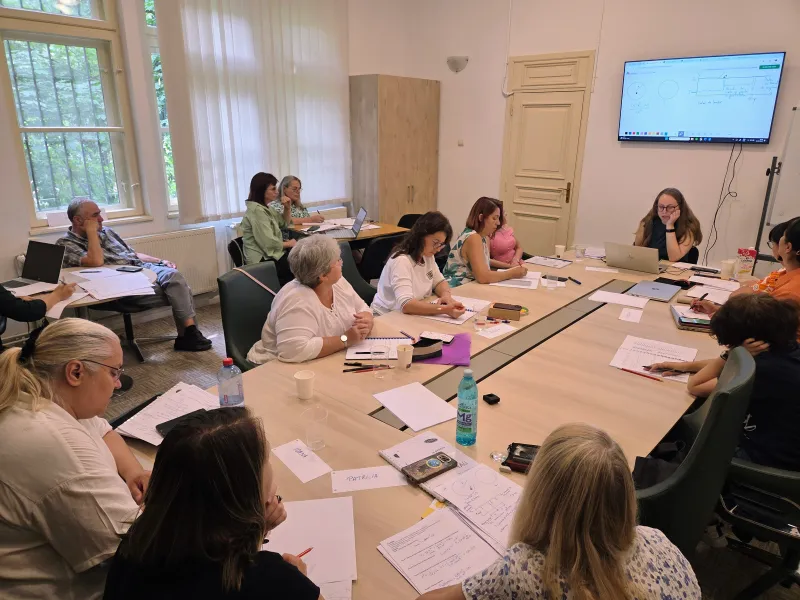
Photo: teacher attending conference session taking notes diverse audience, via astro4edu.org
Every conference badge comes with an implicit map: your title, your track, your tribe. Math teachers drift toward numeracy sessions, technology coordinators hover in the demo labs, and principals cluster in leadership panels. The schedule reinforces it, sorting hundreds of sessions into neat lanes with tidy labels.
But ask around long enough, and a pattern emerges. Some of the most cited professional breakthroughs in education didn't happen in the session that matched a person's job description. They happened in the wrong room.
The Session That Wasn't Meant for You
Consider the profile of an accidental cross-pollinator: a high school science teacher from Ohio who, after missing her intended session on lab simulations, ducked into a literacy panel on disciplinary reading. She left with a framework for helping students parse scientific texts — a challenge she'd struggled with for years — that no science-specific session had ever addressed.
Or the district technology director who sat in on an early childhood play-based learning workshop because his first-choice session filled up. He came out questioning whether his district's one-to-one device rollout honored the developmental rhythm he'd just watched a kindergarten teacher describe.
These aren't lucky flukes. They're a function of how problems in education actually behave. Reading struggles don't stay in English class. Engagement issues don't respect department boundaries. The silos in a conference program are administrative conveniences, not reflections of how learning works.
Why Adjacent Fields Solve Your Problems
There's a reason cross-disciplinary attendance pays off: adjacent fields have often already wrestled with your problem, just wearing different clothes.
A math teacher battling student math anxiety can find fresh language in a session on test anxiety in standardized literacy assessment. A school counselor attending a design-thinking lab may discover protocols that reshape how she runs conflict mediation. An assistant principal in a hands-on maker-space workshop might see, more clearly than any policy brief could show him, what authentic student agency looks like.
The mechanism is straightforward. When you attend a session inside your specialty, you spend your cognitive energy evaluating — comparing what you hear against what you already know. In an unfamiliar session, you're forced to listen differently. Concepts arrive without the usual assumptions attached, and your brain does the translation work that so often produces the insight.
Researchers who study innovation have long observed that breakthrough ideas tend to travel across boundaries rather than within them. Education conferences, with their dense concentration of specialized expertise under one roof, are arguably the most efficient cross-boundary engines available to a working educator. Most attendees just never open the throttle.
The Costs of Staying in Your Lane
None of this is an argument against depth. A veteran AP Chemistry teacher who needs a specific update on lab safety regulations should absolutely be in that session. Track-based scheduling exists for good reasons, and conference organizers engineer it deliberately.
But there are real costs to treating your track as a boundary rather than a home base:
- Echo chambers harden. Sessions within your specialty tend to circulate the same assumptions you already hold. Three days of agreement can feel validating while producing very little that's new.
- The same vendors and voices follow you. Track loyalty means seeing the same product demos and hearing the same consultants, just in different rooms.
- You miss the translation layer. Some of the most valuable conference knowledge is the ability to speak the language of departments you don't lead — a skill that separates administrators who unify faculties from those who merely manage them.
A Framework for the Deliberately Unconventional Schedule
If you're headed to an upcoming gathering — whether it's a national conference in a convention center or a regional event at a state university — consider allocating your sessions with intention rather than habit. A workable rule of thumb is the 60/30/10 split:
60 percent in your lane. These are the sessions that address your core responsibilities and justify the registration fee to your district. This is the professional development you can defend on paper.
30 percent in an adjacent lane. Choose sessions that serve a different role but tackle a problem you own. A department chair might sit in on classroom management sessions designed for new teachers. A curriculum specialist might join a family-engagement panel. Look for the shared problem, not the shared job title.
10 percent in the genuinely foreign. One session, maybe two, where you understand almost nothing on the session description. The goal here isn't applicability — it's perspective. Attend as an anthropologist. Notice what the field is excited about, what language it uses, what it assumes.
Two practical additions make the framework work. First, write down your question before you walk in. A single sentence — How do they get kids to revise their writing? — turns passive attendance into active mining. Second, capture the cross-room idea in the same notes file as your core sessions. Ideas that live in the margins die there.
Building a Culture of Wandering
Districts and conference organizers can do more than leave this to individual initiative. Teams that attend together can deliberately divide and scatter — assigning one member to each major track and reconvening each evening to swap findings. The debrief conversation, where a math teacher explains a literacy session to a principal, is itself a form of cross-disciplinary learning, compressed and shared.
Organizers, for their part, could label sessions by the problem they solve rather than the audience they serve. A session titled "Rebuilding Attendance After Chronic Absenteeism" invites a wider room than one titled "For Building Administrators."
The broader point is simple. A conference is one of the rare moments when an entire profession gathers in one place, its boundaries temporarily dissolved. Most attendees spend those days defending the very boundaries they came to escape.
The next time you're building your schedule, leave one slot unguarded. Pick the session with the least obvious connection to your job. Sit down, take out your notebook, and see what the wrong room has to offer the right question.