Listening Past the Lights: What Booth Demos Won't Tell You About That Shiny New Platform

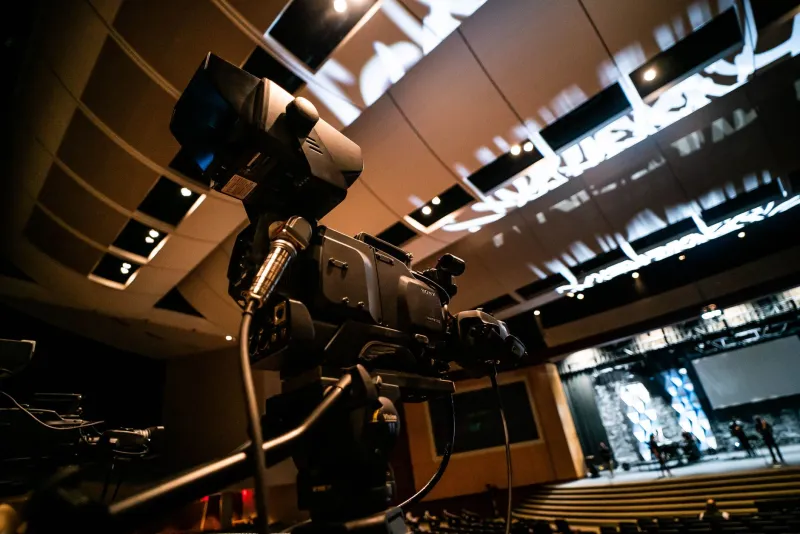
Photo by Photo by Evan Marvell on Unsplash on Unsplash
Every conference floor hums with the same soundtrack: a demo loop, a giveaway raffle, and a rep promising that their platform will 'transform student outcomes.' For a district administrator with a budget cycle closing in three weeks, the temptation to believe is real. But polish is a marketing expense, not a product feature.
The most reliable way to separate genuine innovation from well-funded theater is to listen differently. Treat every booth conversation as a deposition, not a sales pitch — and know in advance what a good answer sounds like.
The Demo Is a Trailer, Not the Film
No vendor shows you the unglamorous parts at a conference. Onboarding friction, rostering headaches, offline behavior, and what the tool looks like on a five-year-old Chromebook in a rural district with spotty bandwidth — none of that makes the highlight reel.
So your job on the floor is not to evaluate what you see. It is to evaluate how the person across the table responds when you ask about what you can't see. Vendors with substance welcome those questions. Vendors with a slide deck deflect them.
Four Red Flags to Catch Early
1. AI as a noun, not a method. When a rep says the platform 'uses AI' and stops there, you've learned nothing. Ask which models, trained on what data, audited by whom, and how bias was tested. A credible team can describe their approach in plain English. A hollow one repeats the phrase like a talisman.
2. Privacy answered with a link, not a sentence. Every legitimate vendor should be able to say, unprompted, whether they comply with FERPA and COPPA, whether they've signed your state's student data privacy agreement (many states run consortium agreements through initiatives like the Student Data Privacy Consortium), and where student data physically lives. Hesitation here is disqualifying.
3. Evidence that can't name a methodology. 'Research shows' without a citation is a red flag. Ask for the study, the sample size, and — critically — whether the research was independent or conducted in-house. Both can have value, but you deserve to know which one you're getting.
4. Pricing that starts with 'it depends.' Everything depends, but evasiveness about per-student costs, implementation fees, and professional development requirements signals a pricing model built to be negotiated after you're invested.
The Questions That Change the Conversation
Bring these to every booth. The quality of the answer matters more than the answer itself.
- Walk me through a district that rolled this out and then rolled it back. What happened? Honest vendors know their churn stories.
- What does week three look like for a teacher using this with no extra training? This surfaces the gap between demo conditions and classroom reality.
- Who owns the data if we leave? Exportability, format, and timeline should be answered in under a minute.
- What accessibility standards do you meet? WCAG 2.1 AA compliance should be a fluent answer, not a follow-up email.
- Can I pilot with one grade level before a district commitment? Tools confident in their value start small. Tools confident in their contract want it signed.
A Five-Point Rubric for the Flight Home
After the floor closes, score each tool you saw on a simple 1–5 scale before the brochures blur together:
- Transparency — Did they answer data, security, and methodology questions directly?
- Evidence — Is there independent research, or only testimonials and case studies they wrote themselves?
- Fit — Does this solve a problem your teachers actually named, or one the marketing deck invented?
- Total cost — Including licenses, devices, PD hours, and staff time, not just the sticker price.
- Exit path — Can you get your data out cleanly when (not if) the contract ends?
Any tool scoring below a three on transparency or exit path should not advance, regardless of how impressive the demo felt. Those two dimensions predict whether a vendor is building a partnership or a trapdoor.
Bring Back a Process, Not a Purchase
The best outcome of a conference booth conversation is rarely a signed contract. It's a shortlisted candidate that enters your district's normal evaluation pipeline — a pilot, a teacher review panel, a procurement checklist that hasn't been influenced by a free tote bag.
Conference floors are designed to compress judgment into minutes. Resist the compression. The flashiest booth in the hall and the most durable tool in your classrooms are, more often than anyone in marketing would like to admit, two different products.