Rescuing the Hour: How Sharp Questions Turn a Floundering Panel Into the Best Session You Attend
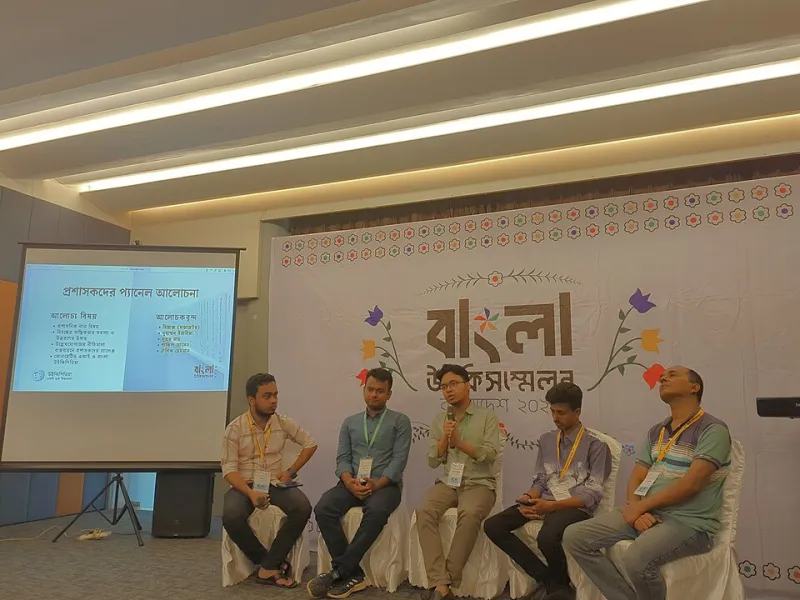
Photo: Sajid Reza Karim, CC BY-SA 4.0, via Wikimedia Commons
No conference format is criticized more or redesigned less than the panel. Keynotes get coaching, workshops get lesson plans, but panels persist in their default state: five people behind a table, a moderator reading questions nobody wrote for this room, and forty minutes of what one veteran attendee I spoke with called "mission statements wearing blazers."
It doesn't have to go that way. The difference between a wasted hour and a memorable one is frequently determined not by the panelists or the moderator, but by whether someone in the audience came prepared to steer.
Learn to Read a Panel in the First Ten Minutes
Skilled conference-goers diagnose a panel fast, and so can you. Watch for three signals.
The redirect pattern. When every answer begins with "That's a great question, and it reminds me of my work at..." — you're listening to prepared remarks in disguise. Panelists like this have a deck in their head and will deliver it regardless of the question.
The depth gap. Notice which panelists give specifics — numbers, dates, failures, names of tools they abandoned — versus those who speak in categories: "stakeholders," "journeys," "ecosystems." Specificity is the fingerprint of genuine expertise. Generalities are the fingerprint of a calendar invite accepted on a Tuesday.
The moderator's posture. A moderator who takes notes, follows up, and interrupts politely is your ally. A moderator reading from a printed list is running out a clock. Adjust your strategy accordingly: with a weak moderator, audience questions are the only steering mechanism in the room.
The Anatomy of a Question That Works
Bad audience questions are long autobiographies ending in a shrug. Good ones are short, pointed, and difficult to answer with a platitude. The structure that works:
- One sentence of context, maximum. "We're a 4,000-student district rolling out AI policies this fall."
- A choice, not an open field. Force panelists to take a position between options.
- A time constraint, stated aloud. "Thirty seconds each, starting with the person who hasn't spoken yet."
That last move — naming who answers first — is quietly the most powerful. Moderators almost always default to the same panelist. Audience members can redistribute the floor.
Questions That Cut Through
Moderators I interviewed for this piece keep personal arsenals of questions designed to bypass rehearsed answers. A field-tested sampling:
- "What did you get wrong in the last twelve months, and what did it cost you?" Failure questions short-circuit promotion. A panelist who answers this smoothly is usually the real thing.
- "If your budget were cut in half tomorrow, what would you cut first — and what would you protect?" Priorities reveal more than vision statements.
- "What's a tool your district bought with enthusiasm and quietly stopped using?" In edtech, the graveyard question is gold. It signals to the room that candor is welcome.
- "Where do you disagree with the person next to you?" The fastest route to an actual panel rather than five parallel speeches. Moderators who won't ask it are often grateful when an audience member does.
- "Complete this sentence: educators should stop doing ___ immediately." Forces a concrete claim that can be quoted, challenged, and remembered.
If the Room Is Dead, Work the Margin
Sometimes the panel is beyond saving, and the strategic move is to stop investing in it. Sit near an aisle. Use the Q&A lull to make eye contact with a panelist who said something specific earlier. Approach them afterward — the hallway conversation following a weak panel is often where the real session happens.
One moderator put it best: "A panel is an hour of raw material. Somebody in that room has to do the refining. It might as well be you."
The next time you scan a conference program and sigh at the word "panel," consider it an invitation. The format won't fix itself.