Sixty Minutes to Showtime: The Invisible Labor Behind Every Great Educator Conference
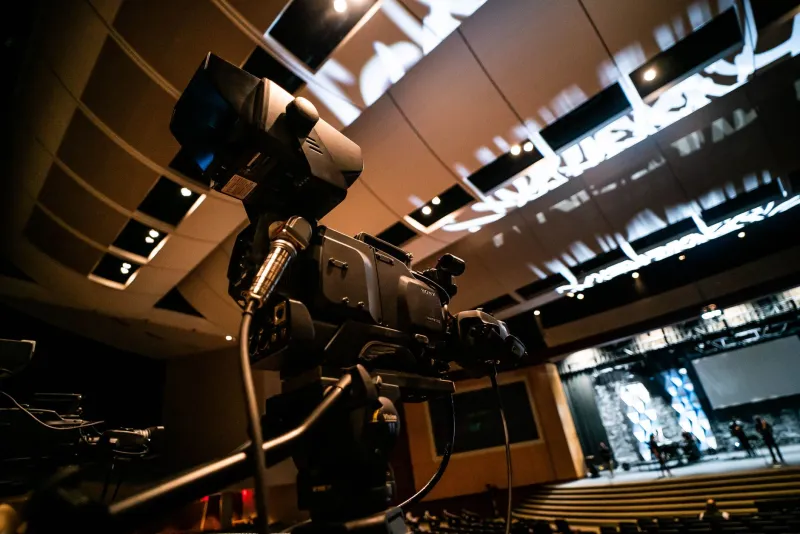
At 7:02 a.m., the ballroom doors of a Midwest education technology conference are still locked. Registration doesn't open until 8:00, and behind those doors, three problems are unfolding at once: the main projector won't recognize the presentation laptop, half the volunteer crew hasn't arrived, and the opening keynote speaker has just texted from a delayed flight in Denver.
If you have ever attended a smooth, professional conference — or run a back-to-school PD day in a district gymnasium — you know that none of that smoothness is an accident. It is the product of an hour that most attendees never see. What follows is a composite portrait drawn from interviews with event staff, volunteers, and speakers, and it ends with a practical checklist you can carry back to your own building.
The Projector Problem Nobody Saw Coming
The AV lead, a contractor who has worked education events for fifteen years, discovered the failure at 6:40 a.m. during her standard test run. The laptop and projector refused to negotiate a resolution. Her fix was not dramatic — a backup HDMI cable, a restart, a fallback dongle pulled from a plastic tackle box she brings to every gig. But her calm was deliberate.
"The audience never sees the first two failures," she explained. "They only see the third attempt, if it works." Her advice for anyone running a school assembly or district institute day: assume the primary connection will fail, and stage the backup within arm's reach, not in a closet down the hall.
Volunteers: The Workforce Nobody Trains in Advance
By 7:15, six of the ten scheduled volunteers had checked in. The volunteer coordinator did not panic; she had planned for exactly this. Her roster assumed a 60 percent show rate, and her station assignments were designed so that no single post depended on one person. Late arrivals were folded into floating roles rather than fixed stations.
This is a lesson many school event organizers learn the hard way. A volunteer plan built around best-case attendance collapses the moment two people call in sick. A plan built around a realistic floor — with simple, self-explanatory tasks like greeting, wayfinding, and badge distribution — absorbs the same disruption quietly.
The Speaker in Terminal C
The keynote's flight delay was the morning's genuine wildcard. The event director's response followed a script she had refined over years: confirm the arrival time, prepare a shorter opening program as a buffer, and brief the emcee on how to stretch or compress the schedule without signaling anything to the audience.
The speaker landed at 7:38, arrived at 8:20, and delivered the keynote to a room that never knew there had been a question. What made the recovery possible was not luck. It was a written contingency — a decision made weeks earlier about who calls whom, and in what order, when travel goes sideways.
Why This Hour Matters for Educators
Districts and schools run hundreds of events a year: institute days, family tech nights, student showcases, vendor fairs. Each one has its own version of the 7:00 a.m. scramble. The difference between an event that feels effortless and one that feels improvised usually comes down to whether someone planned for the hour before doors open.
Here is the checklist, distilled from the professionals:
- Test everything twice. Run a full audiovisual check the day before, and a second one sixty minutes out. Bring your own cables, adapters, and a charged backup device.
- Plan volunteer staffing to a realistic floor, not a hope. Assign floating roles that latecomers can join without retraining.
- Write the contingency, don't just imagine it. Decide in advance who makes the call when a speaker is late, and what the backup program looks like.
- Brief the front-of-room voice. Your emcee or welcoming speaker should know how to adjust pacing without broadcasting the problem.
- Walk the room as an attendee. Ten minutes at the entrance, asking "where do I go first?" reveals more than any planning spreadsheet.
The People Behind the Curtain
The final hour before a conference opens is unglamorous work — cable runs, badge stacks, coffee urns, and radio chatter. But for educators, it is also deeply familiar. It is the same labor that turns a classroom from a storage room into a learning space by 8:00 a.m., every single day.
Recognizing that parallel is more than sentiment. It is a reminder that the skills educators already possess — contingency planning, calm under time pressure, improvising with limited resources — are precisely the skills that make events succeed. The next time you attend a conference and everything works, you will know why: someone spent the hour before doors open making sure it would.