Inside the Scoring Room: What Reviewers Really See When Your Session Proposal Lands

Photo: Post of India, GODL-India, via Wikimedia Commons
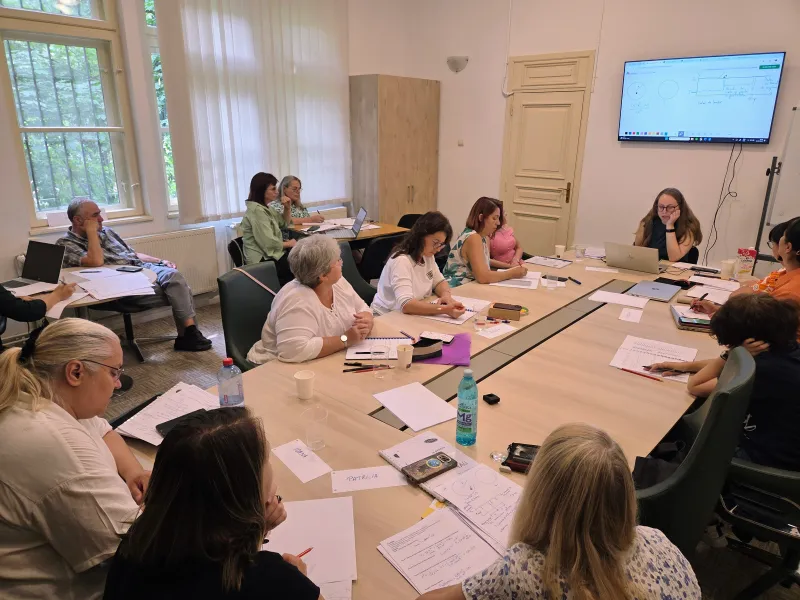
The conference program looks effortless once it's printed: a clean grid of sessions, each with a confident title and a polished description. What attendees never see is the room — literal or virtual — where that grid was assembled from hundreds of competing submissions, most of them worthy, all of them read by people with a finite number of slots and a deadline pressing down.
To understand how that filtering really works, we spoke with reviewers from three mid-sized US education technology conferences. Their accounts, collected separately, describe a process more deliberate — and more imperfect — than most submitters assume.
The Rubric Is Real, But It's Not the Whole Story
Nearly every conference uses a scoring rubric, and the core categories are strikingly consistent: clarity of learning outcomes, relevance to the audience, presenter experience, and evidence of practical application. Reviewers typically score each proposal on a scale — often one to five per criterion — before the real work begins.
"The rubric gets you to a defensible number," one veteran reviewer told us. "It doesn't get you to a decision." With acceptance rates frequently below 30 percent, a cluster of 4s and 5s is not enough. When dozens of proposals land in the same band, reviewers shift from scoring to sorting, and the criteria that break ties are rarely written down anywhere.
The Debates That Decide the Program
The most contested question in every review cycle we heard about was vendor neutrality. Conferences want practical tool demonstrations, but attendees — and sponsors, ironically — grow wary when a session reads as a product pitch. Reviewers described combing descriptions for language like "our platform" or "why you should switch," and flagged anything that smelled like marketing dressed in pedagogy.
The second recurring debate concerns balance. A program heavy on AI tools leaves no room for assessment design. A program stacked with district-level administrators shortchanges classroom teachers. Reviewers described trading proposals across strands almost like a draft: "I'll give up one of my data-privacy picks if you take my library media specialist session."
One reviewer put it plainly: "We're not accepting the best 60 proposals. We're assembling the best 60-session program. Those are different problems."
Why Strong Proposals Get Rejected
Ask any reviewer and they will volunteer the same confession: genuinely excellent proposals get cut every year. Sometimes the strand is full. Sometimes two reviewers scored the same proposal wildly differently and the tie went elsewhere. Sometimes the session simply resembles three others already accepted.
There are also avoidable failures. Proposals written for the wrong audience — a deep technical dive submitted to a conference of classroom teachers — score poorly on relevance no matter how strong the content. Vague learning outcomes are the most common flaw reviewers cited. "Engage attendees" and "explore possibilities" tell a scorer nothing. "Participants will leave with a three-step protocol for evaluating AI-generated feedback" tells them everything.
What Submitters Can Actually Control
The reviewers we spoke with offered a consistent set of recommendations for educators planning next year's submission:
- Write outcomes, not themes. Concrete, observable takeaways lift relevance scores immediately.
- Name your audience. A session built for second-grade teachers is easier to place than one built for "educators."
- Show your evidence. A line about what happened when you tried this in your own classroom distinguishes a proposal from a theory.
- Disclose your affiliations. Reviewers respond far better to transparency than to a product pitch they discover mid-read.
- Resubmit. Multiple reviewers noted that revised proposals from previously rejected submitters often score higher the second cycle — the feedback loop works for those who use it.
The Human Margin
Perhaps the most reassuring finding is also the most humbling: review panels are small groups of busy educators making judgment calls under time pressure. The process rewards clarity, specificity, and honesty, but it cannot guarantee fairness at the level of any single decision.
For prospective presenters, that is not a reason for cynicism. It is a reason to write proposals that make a reviewer's job easy — clear, specific, and unmistakably useful — and to treat a rejection as what it usually is: a near miss in a very crowded room, not a verdict on your ideas.